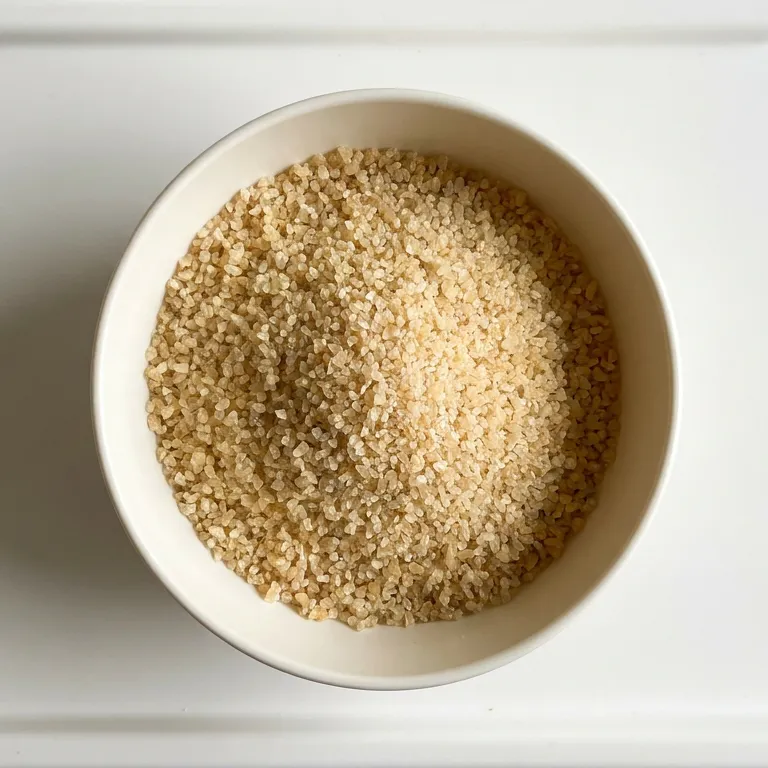
Sooji, what it looks like
Sooji
Based on IAP, ICMR-NIN and 3 more sources
Safe from 6 months

Cooked sooji makes a soft, smooth porridge that a baby can take easily from six months, with gentle energy from its complex carbohydrates and B vitamins. Wheat is a common allergen, but you do not need to delay it; the AAP finds no benefit to putting wheat off past around six months.

How to serve

6+ monthsStart here
9-12 months
12+ months
Smooth, soft porridge6+ months
Smooth, soft porridge
Loose and plain upma

Cook a spoon or two of sooji in a little water until it is soft and smooth, then loosen it with breast milk, formula, or water so it stays on the spoon. Serve it warm and plain, with no salt while she is this young, from a spoon, starting small. Let her appetite decide how much, a little some mornings and more on others, both perfectly fine. Once she is enjoying the plain porridge, you can stir in a little mashed fruit or soft vegetable for flavour.

If she finds the porridge a little grainy, you can grind the sooji to a fine powder first so it cooks up smoother for her.

The same soft cooking can become the upma your kitchen already knows, loose and plain: add the sooji to hot water a little at a time, stirring so it stays lump-free, then thin it to a soft pouring consistency.

Thicker porridge, patties, or dumplings9-12 months
Small soft pieces
Rava idli

By now the porridge can be a little thicker and lumpier, and her upma can thicken up the same way, its grains soft but no longer pouring. This is also the age she can start having sooji as soft patties, little pancakes, or dumplings, cut into small pieces she can pick up to practise her pincer grasp. Keep them small and soft.

If your family already makes rava idli, this is about the age she can begin having it too.

Spoon, fingers, or both? (coming soon)
Porridge, upma, or breads12+ months

By her first birthday she can eat sooji much the way the rest of you do: the same porridge, now thick, along with soft breads, pasta, upma, and other grain dishes made from sooji, chopped or mashed where a piece needs it.

A thicker porridge clings to the spoon, which makes her early tries at feeding herself a little easier. Keep going light on salt, and skip added sugar until she is two.

Spoon, fingers, or both? (coming soon)
Myth busted

A well-cooked sooji porridge is soft and gentle, easy for a baby to swallow. It is not too heavy for her to digest.

Why?

IAP's own list of feeding myths includes the idea that sooji is heavy or hard for a baby to digest, and marks that belief false. If it worries the family, start with a thin, well-cooked porridge in small amounts and see how she does over a few days before making it thicker or more often.

What other moms wonder

Real questions from moms, answered by Anu.

My baby turns away from rava porridge no matter how I cook it. Is something wrong?
When she refuses, take it away calmly and offer it again another day. It often takes plenty of tries before a new food clicks, and rava is no different.
When she refuses food (coming soon)
My little one is on the smaller side and everyone keeps pushing ghee-heavy rawa to fatten her up.
When your baby is on the smaller side, everyone means well pushing extra ghee in her rava. A little ghee for energy is fine, but what shows she is growing well is steady weight on her chart, not how round she looks. If you are unsure, her paediatrician can check her chart with you.
Her weight and growth ›

More questions

Do I need to add sugar, jaggery or cow's milk to make sooji a proper, filling meal?
No, she doesn't need any of them. Cooked soft, plain sooji is filling on its own, so it needs no sweetener to count as a proper meal. Skip sugar and jaggery until she turns two, and keep salt out of her food while she is small. A little cow's milk cooked into her food is fine from six months if dairy suits her, but milk as a drink waits until she is one.
Should I let her start feeding herself sooji?
Yes, and it grows with her. At six months she takes soft porridge off a pre-loaded spoon, with you doing the feeding. As she nears nine to twelve months and starts picking up small pieces, she can begin feeding herself the softer sooji forms she is ready for. Spoon, fingers, or both? (coming soon)
How often can I give sooji, is every day okay?
Sooji is a gentle, easy grain, but it is refined wheat. It works best as one of several grains you rotate rather than the everyday staple. Giving other, denser foods room on the other days helps her get iron and protein that sooji alone does not supply well.
Sooji has gluten, is it safe, and should I wait until my baby is older to give it?
Yes it is safe, and no, there is no need to wait. There is no evidence that holding wheat or gluten back past around six months prevents an allergy. Introduce it from six months like any new food, on its own, and watch over the next few days for any reaction.
Should I dry-roast the rava before cooking it?
You can, but you don't have to. Many of us find that dry-roasting the rava in a pan first gives a nicer aroma and a less sticky porridge, which is why it is such a common step. It comes down to taste and texture, so skip it happily on a busy morning.

If this helped, send it to a friend.

Share with a mom friend ›
Talk to meWondering about a food, or something a page doesn’t cover?I check the guidelines and reply. Talk to me on WhatsApp Want to hear when new pages go up?One short note on WhatsApp when a new food or guide is ready. Nothing else. Follow the channel
Educational only, and never a replacement for your paediatrician. Read the full note ›