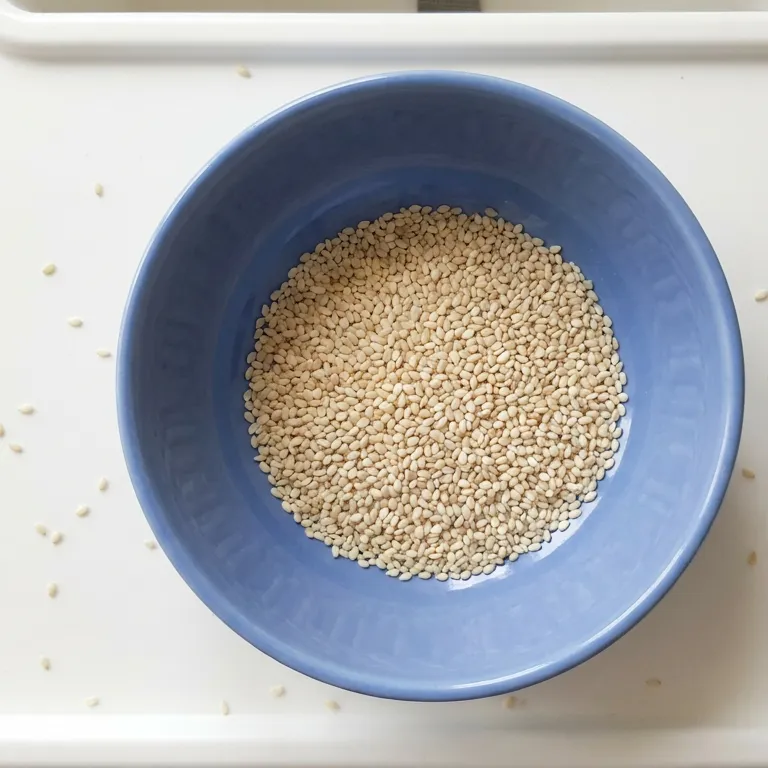
Sesame is one of the few plant foods ICMR-NIN names among the calcium-rich foods, so ground into her meals it adds calcium for her growing bones. We can start it from around six months, as ground seed or paste. It is a common allergen, and current guidance introduces allergens early rather than holding them back.
How to serve
Finely ground or thin tahini6+ months
We start sesame finely ground, or as a thin smear of tahini, stirred through something soft she already eats, like her curd or warm cereal. It always goes in as the ground seed or the smooth paste, never whole loose seeds. Starting a little later? Begin the same gentle way, with finely ground sesame in small amounts.
Tahini is just the smooth sesame paste now sold in many stores. Mix it lightly through her food, never piled on as a thick spoonful by itself.
Because sesame is an allergen, give it on its own first and watch her over the next few days, for a rash, vomiting or loose motions, before bringing in another new food. If any of those show, pause the sesame and check with her paediatrician. To start, a small pinch is enough, and keep it plain: no added salt while she is little, no added sugar before she is two, and no honey before her first birthday: honey can carry botulism, which makes babies under one seriously ill. Let her appetite lead the amount.
Ground through soft finger foods9-12 months
At this age sesame is still finely ground or smooth tahini. What changes now is that she is starting to eat on her own. You can stir a little ground sesame or thin tahini through the soft foods she spoons up herself, like a thick porridge or mashed banana. Or spread a thin layer of tahini along a strip of soft toast she can pick up and hold. Holding that soft strip is good early self-feeding practice.
Keep the tahini spread thin, never a thick spoonful on its own, and keep whole loose seeds off her plate. A small spoonful of ground sesame a few times a week is plenty here.
Ground into family meals12+ months
Ground sesame and smooth tahini can join whatever the family is eating once she is one. You can mix it into her porridge or curd, work a little into roti or chilla dough, or set out a thin tahini dip with soft cucumber or fruit strips she can hold.
The form is the one thing that stays the same. Keep it finely ground or as smooth tahini, and keep whole loose seeds off her plate, just as you do now.
Til is a year-round food, summer and winter alike. You do not have to keep it away in the hot months.
Why?
Many of us grew up hearing that til is 'heating' and should be kept away in the summer, or saved up for winter. It is simply a year-round food. A little ground sesame sits fine with a baby in any season, and it brings the calcium her growing bones need. If it settles worries at home, offer it earlier in the day or stirred into cooling curd. Some families give it more in winter, and there is no harm in that either, so long as she still gets it and it does not wait for a season.
What other moms wonder
Real questions from moms, answered by Anu.
More questions