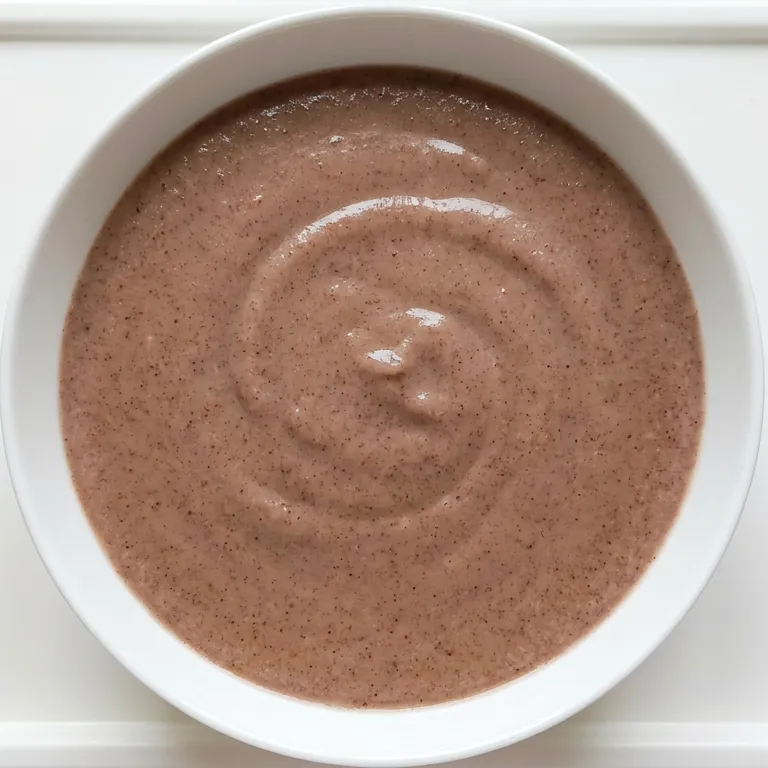
Ragi, or finger millet, is one of the calcium-rich foods ICMR-NIN names alongside milk and sesame. That calcium is what her growing bones lean on. We can start her on it from six completed months, when complementary feeding begins alongside breastfeeding. It cooks into a soft, smooth porridge she can manage right from the start.
How to serve
Smooth ragi porridge6+ months
Ragi comes to her first as a smooth, cooked porridge. Cook the flour right through in water so it turns out smooth and free of lumps, thick enough to stay on the spoon without running off when you tilt it. If a batch comes out too stiff, just loosen it with a little breast milk, formula or water until it is easy to spoon.
From around her eighth month, once she is having other tastes, a small pinch of cardamom or cinnamon can be stirred in as the porridge cooks.
Thicker ragi porridge9-12 months
By now she can take the same ragi porridge, just grown thicker as she manages more.
Around this age, if your home already makes ragi dosa, she can begin to share a little of it. A soft, fluffy ragi idli works too, broken into small pieces for her. And a soft ragi cheela with finely grated vegetables cooked into it suits her from around ten months, cut into small pieces. Her share of any of these is made plain, with no added salt before she turns one.
Thick, halwa-style porridge12+ months
By around a year, the same ragi porridge can be made thicker, close to a soft halwa, as she grows into more textured food.
Ragi is part of the family's everyday meals now, and she shares them: a soft ragi roti, a little ragi upma, the dosa or cheela she already knows from the family pan, or ragi stirred into her warm milk.
Keep it plain, with no jaggery or sugar of any kind before she turns two, even though the sweetened malt versions are common. Her own tastes are still settling, so the grain's mild flavour is enough on its own.
Ragi is a gentle grain to start her on at six months, cooked soft and smooth. There is no need to keep it back out of fear that it sits too heavy for her or will make her constipated.
Why?
This is a common worry, and an understandable one. But there is no need to hold ragi back past six months. Cook it soft and smooth, start with small amounts, and let her settle into it in her own time. If plain ragi still seems to sit heavy on her, sprouted ragi flour is a gentler switch many homes make, since sprouting makes the grain easier to digest. Every baby is different, and if the tummy or stool trouble carries on, do mention it to her doctor.
Ragi is a good calcium food for her growing bones. It is not an iron-rich food, whatever you may have heard.
Why?
ICMR-NIN places ragi among the calcium foods, so this is not where her iron comes from. Iron is best taken up from flesh foods like meat and fish, and greens and pulses such as dal carry some iron too. Keep offering those, and if the doctor has prescribed iron drops, keep giving them, never stopping them on ragi's account.
What other moms wonder
Real questions from moms, answered by Anu.
More questions