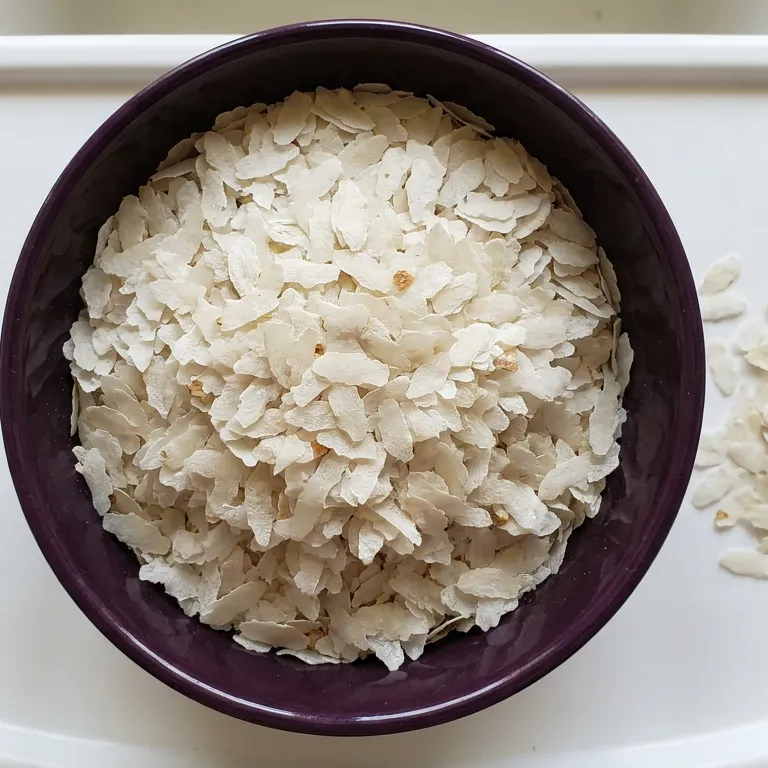
Poha (Flattened Rice), what it looks like
Poha (Flattened Rice)
Based on IAP, ICMR-NIN and 3 more sources
Safe from 6 months
Not a common allergen

Poha is soft, quick-cooking flattened rice, and we can start her on it at six months, rinsed and cooked into the soft, well-mashed first food the IAP asks for. It is already on the family's breakfast table, and her bowl simply grows with her, from that first smooth mash to a softer share of the family plate.

How to serve

6+ monthsStart here
9-12 months
12+ months
Soft mashed poha6+ months

Thin poha is the one to start with, since it soaks fast and mashes easily. Rinse the flakes well and cook them soft in a little water, then mash them down smooth and loosen the mash with her usual breastmilk, formula or plain water. You want it thick enough to cling to the spoon rather than run off when you tilt it.

A couple of spoonfuls is plenty for the first few times, and you get to see how it suits her. From around her seventh month the mash can sit thicker, close to a thick porridge, still smooth with nothing papery left in it.

Keep it plain: no added salt while she is little, no sugar or jaggery until she is two, and no honey before her first birthday, for the botulism risk honey carries for a baby. A little ghee stirred through makes a small bowl go further for her.

Soft flakes, poha balls9-12 months
Soft flakes with vegetable
Soft poha balls

Lumpy and granular food matters at this age, so we can leave the perfectly smooth mash of the early months behind. The same poha can now come as it is, cooked soft and moist with the flakes left whole, and small, very soft pieces of vegetable cooked in for her to practise chewing on. If whole flakes are still hard going, mash it lightly for a few weeks more.

Cooked a little fluffier, it becomes something she can manage herself. Many of us press the soft cooked poha into little balls she can hold, or simply let her pick up the soft flakes with her fingers while you spoon the rest. Let her appetite decide how much goes in.

Poha is a rice food. Cooked rice left sitting out can grow germs, and warming it again does not make it safe, so her poha is best cooked fresh and finished the same day rather than a morning batch rewarmed at night. Her share still needs no added salt.

Spoon, fingers, or both? (coming soon)
Softer family-style poha12+ months

From about a year she eats what the family eats, and poha is a family dish long before it is a baby one. Her bowl comes out of the same pot as everyone else's, vegetables and all, softened a little more for her and left with more texture than her earlier mash. You mash it only where she still needs it. She picks the soft flakes up herself now, the way she began doing a few months back.

If the family's poha has whole peanuts in it, pick them out of her share; a whole peanut can still choke her at this age. Keep her portion light on salt, and still nothing sweet until she is two.

Spoon, fingers, or both? (coming soon)
Myth busted

Poha is a year-round food, monsoon and winter included. It does not give her a cough or a cold.

Why?

Many of us grew up hearing that poha is 'cooling', best kept away in the rains or after the afternoon. A cold comes from the people around her, not from a bowl of soft poha, and this is a food Indian kitchens make in every season. If it settles minds at home, give it earlier in the day, warm and freshly cooked, with a little ghee stirred in.

What other moms wonder

Real questions from moms, answered by Anu.

My 7-month-old gags on mashed poha even after a long soak. Am I getting the texture wrong?
Most of the time a gag on poha is part of learning a new texture. Soaking alone leaves poha stiffer than it looks, so what she needs is the properly cooked soft mash, loose and smooth with nothing papery in it. If the gagging keeps happening, make the mash looser and smoother.
Choking vs gagging ›
My 10-month-old turns away from plain avalakki now, and we add no salt or sugar.
Plain poha does go flat for a lot of babies once the newness wears off. Offer it warm, with the same little ghee she already has in her bowl, and take the bowl away calmly if she is not interested. Most babies need a food offered again and again before they take to it.
When she refuses food (coming soon)

More questions

I found whole flakes of poha in my 11-month-old's nappy. Is something wrong with her digestion?
Bits of food coming through whole is common after starting solids, and on its own it is not a sign of trouble. A properly cooked soft mash leaves fewer whole flakes than a quick soak does. If she is comfortable and her usual self, there is nothing here to fix.
I keep hearing poha swells up and sticks to a baby's insides, so it has to be ground fine and given watery. Is that true?
No, and poha does not have to be ground fine or thinned down to water either. It is soft cooked rice, and a smooth mash is all she needs at the start. By about nine to ten months she wants small soft lumps and whole soft flakes, not less texture. If her stools do turn hard, a little extra water between feeds and a gentle tummy rub usually help.
Should I try baby-led weaning with poha?
Spoon and fingers both work with poha. It begins as a spoon food, smooth and soft, with nothing there for her to pick up. From around nine or ten months the flakes can stay whole, and she can pick up the soft flakes or a pressed poha ball herself while you spoon the rest. Most of it lands on the floor early on, and that is part of it. Spoon, fingers, or both? (coming soon)
Poha is light and quick to make. How often can she have it, and is every day all right?
A few mornings a week suits it better than every day. Poha is a refined grain, and the WHO counts grains as just one of the food groups she needs across a day. On the days she has it, a little dal or soft vegetable in the same bowl does more for her than plain poha. Her share grows through the toddler year, but it stays one dish among many.
Can I dry-roast poha and keep a ground powder ready, to mix with hot water when I am in a rush?
Yes, a jar of plain poha, dry-roasted and ground, is a fair thing to keep for a rushed morning. Mixed with hot water it still has to come out soft and smooth in her bowl, never dry or powdery. Keep the jar small and fresh rather than making a big batch. And keep it as one option, not her only texture: by about nine to ten months she needs lumpy, granular food too.
Everyone online calls poha iron-rich. Is that true, and what should I serve alongside it?
Poha is not the dish to count on for her iron. Rice flakes are not on ICMR-NIN's iron-rich list, which names green leafy vegetables, dals and dry fruits. The WHO also notes that grains make nutrients harder for her body to take up. With two out of three Indian children under five anaemic, that is worth knowing. The iron comes from what goes alongside it, a dal or a soft green leafy vegetable in the same bowl.

If this helped, send it to a friend.

Share with a mom friend ›
Talk to meWondering about a food, or something a page doesn’t cover?I check the guidelines and reply. Talk to me on WhatsApp Want to hear when new pages go up?One short note on WhatsApp when a new food or guide is ready. Nothing else. Follow the channel
Educational only, and never a replacement for your paediatrician. Read the full note ›