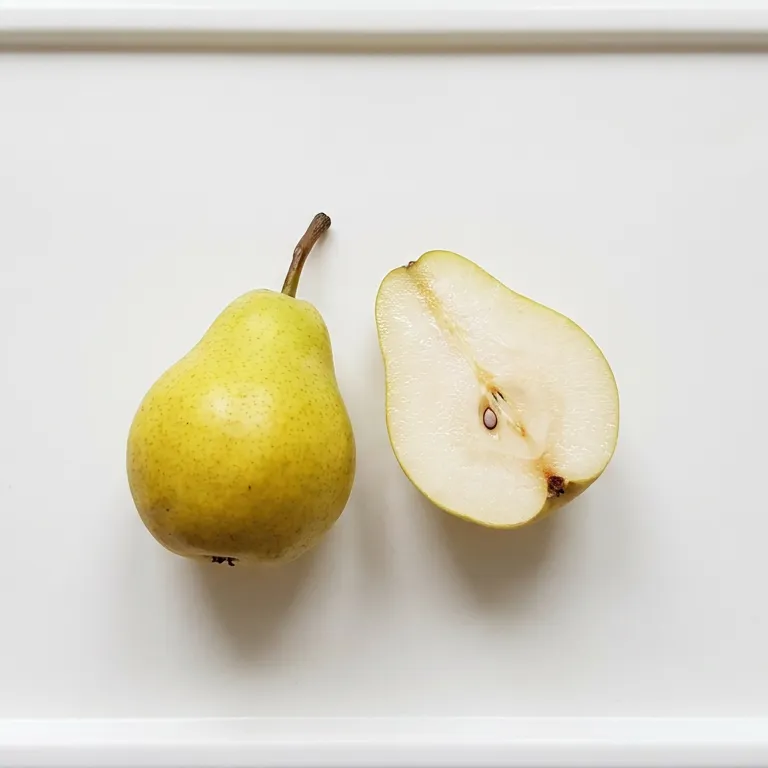
A soft cooked pear, or a very ripe one mashed smooth, makes an easy, naturally sweet first food from six months. It carries gentle fibre, which is one reason the ICMR-NIN counts pears among its everyday fruits. It is more of a steady daily fruit than a nutrient standout.
How to serve
Soft cooked pear mash6+ months
A soft cooked pear is the easiest way in. Peel a ripe one, take out the core and any hard bits, then steam, boil or pressure-cook the pieces until they give way under a fork, and mash them to a smooth purée. If the pear is very ripe and soft, you can skip the cooking and just grate or mash it raw.
Pear holds a lot of water, so keep the mash thick enough to sit on the spoon instead of running off it. The fruit brings its own sweetness, so keep her bowl plain, with no added salt before one and no added sugar before she is two. Once she is happy taking it plain, you can stir a little through a cereal or curd she knows, beginning with a spoon or two and letting her appetite guide you.
Soft bite-sized pieces9-12 months
By around nine months she is reaching out to feed herself, so hand her soft ripe pear with the skin off, cut into small, flat, bite-sized pieces she can grip. Managing each piece is good practice for the pincer grasp she needs to feed herself.
A very ripe pear is soft enough to give raw like this. A firmer one is better cooked soft first. Keep the pieces small and flat rather than round cubes she could gulp, and stay with her while she eats.
Family pieces or wedges12+ months
Once she turns one, pear can join the family's own meals. Offer it in bite-sized pieces or soft wedges with the core and seeds taken out, and leave the skin on or off depending on how well she chews.
A whole pear for her to hold and bite from comes a little later, once she chews well and sits calmly to eat. Stay near while she works through the firmer pieces.
A pear stays safe in every season, through winter and through sniffly days alike. There is no need to take it away while she has a cold, and calling the fruit 'cooling' does not change that.
Why?
A cooked or ripe pear does nothing to a baby's body temperature, so it cannot bring on or worsen a cold, a cough or congestion. Elders at home may call it 'thanda' and say it is best kept away in winter or during a sniffle, but the paediatricians most of us see will say a pear is fine all year round. If it keeps the peace at home, offer it warm or at room temperature, never fridge-cold, and a little earlier in the day. Either way the fruit is safe.
What other moms wonder
Real questions from moms, answered by Anu.
More questions