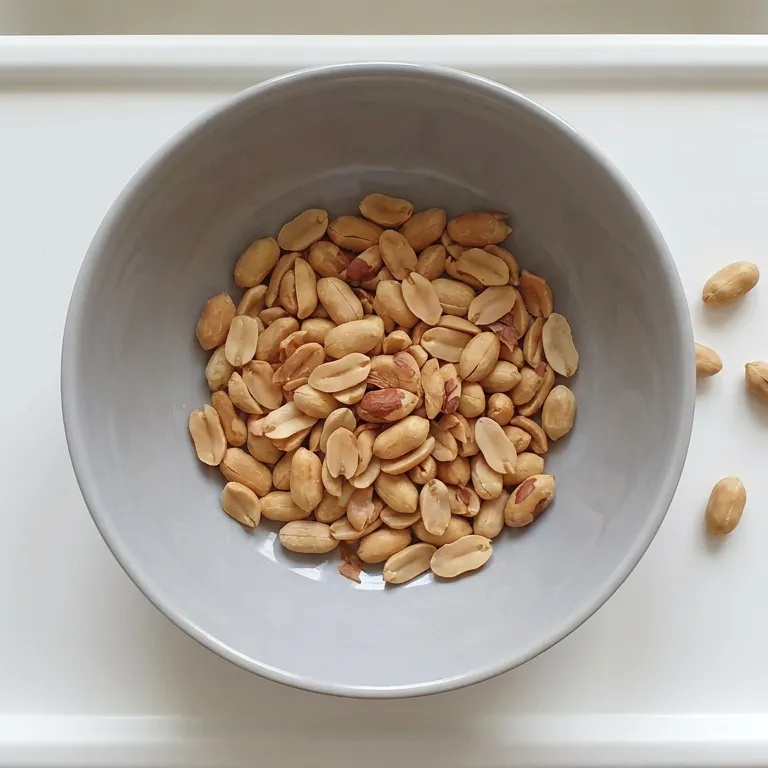
Peanut, what it looks like
Peanut
Based on IAP, ICMR-NIN and 3 more sources
Safe from 6 months
High-proteinHealthy fats

We can start peanut from around six months, given as smooth peanut butter thinned right down, or finely ground into a soft food she takes. The WHO and NHS both say to bring it in early and keep it going rather than hold it back, since that is what lowers the chance of an allergy later. Its fats and protein make it a filling, nourishing food for her.

How to serve

6+ monthsStart here
9-12 months
12+ months
Thinned smooth peanut butter6+ months

From around six months, we start with a small amount of smooth peanut butter, thinned to a runny drip with water, breast milk, or formula, or fine peanut powder blended into a little liquid. It always goes in thinned or finely ground, never a thick spoonful from the jar and never a whole nut. If you are starting her later, around nine or ten months, begin the same gentle way.

Because peanut is a common allergen, that first taste goes on its own, just a small pinch, with no other new foods for the next few days while you watch her.

Once she has taken it well, it can go through the soft foods she already eats: her cereal, porridge, mashed fruit, or curd. Keep it plain, with no added salt while she is little, no added sugar before she is two, and no honey before she turns one, because it can bring on botulism, a serious illness. Let her appetite lead.

Ground into hand-held foods9-12 months
Stir through porridge
Roll in ground peanut

Peanut still goes in finely ground or as smooth peanut butter thinned down, never a whole nut or a piece she picks up. What changes at nine months is that she feeds herself, so the same ground peanut or thinned butter now stirs through the thick, scoopable foods she manages on her own.

She can also hold a soft food herself. Roll a piece of soft fruit she already takes in a little ground peanut, and it becomes easier to grip. A thick spoonful on its own is never safe, one plain scoop of peanut butter can choke her. A small amount a few times through the week is plenty.

Spoon, fingers, or both? (coming soon)
Ground into family meals12+ months

From a year, the same ground peanut and thinned peanut butter simply move into the family's food, stirred through whatever soft meal she shares. The rolling trick still works too.

The form never changes: still thinned or finely ground. Whole peanuts stay off her plate for a long time yet, since a whole nut stays a choking risk.

Spoon, fingers, or both? (coming soon)
Myth busted

A little smooth, finely ground peanut is a normal, nourishing food she can have right through the year. There is nothing in it that heats her up.

Why?

Many of us grew up hearing that peanut is 'garam' and too heating for a small baby. A peanut simply does not change a baby's body warmth. It is a normal, nourishing food in any month of the year. If it settles worries at home, begin with a tiny amount, well thinned, offered earlier in the day so you can watch how she takes it.

What other moms wonder

Real questions from moms, answered by Anu.

Everyone keeps saying peanut is the scariest allergen. How do I give her that first taste without panicking?
Peanut is the allergen that scares almost everyone, so this nervousness is completely normal. The calm way in is a tiny amount of smooth peanut butter, thinned right down and given on its own, earlier in the day so you can watch her.
Starting egg, nuts and other allergens ›
My toddler is small and picky, so I give peanut butter with avocado for weight. Sensible?
Reaching for dense foods when she is small and picky makes complete sense. Peanut butter is rich in protein and fats, so a little of that smooth, thinned peanut she already takes adds real nourishment. Small and steady is fine, and if her weight still worries you, check with your paediatrician.
Her weight and growth ›

More questions

I keep hearing peanut allergy is really just a Western thing that doesn't happen to Indian babies. Is that true?
The IAP does note that peanut allergy is less common in Indian children, and that part is true. But less common is not the same as never, and peanut sits on India's own list of common allergens too. So it does happen here, which is exactly why we start it early and gently, on its own, and watch how she takes it.
Should I try baby-led weaning with peanut, can she feed herself or does it have to be off a spoon?
Peanut is a little different from most first foods, because it always goes in thinned or finely ground, never as a piece she picks up herself. At six months it comes stirred into a soft food on a spoon. From around nine months, as she starts feeding herself, you can stir a little through the soft foods she is already holding. Neither way is wrong, it just follows her age. Spoon, fingers, or both? (coming soon)
How much peanut, and how often?
A pinch of finely ground peanut, or a little smooth peanut butter thinned into her food, is all she needs, with nothing to measure. Once she has taken it well a few times, keeping peanut in her meals regularly helps her body stay used to it. That steady exposure is part of how starting early lowers the chance of an allergy. Let her appetite lead the amount. How much she should eat (coming soon)
You may see some Indian diet charts start groundnut a little later, closer to a year. Why, and what does this page follow?
Different homes and charts begin peanut at different ages, and it is fair to wonder why. Some Indian diet charts, like ICMR-NIN's own, place groundnut a little later, around nine to twelve months. Current allergen guidance from the WHO and AAP starts peanut from around six months, and holding an allergen back does not lower the chance of an allergy. This page starts from around six months, always in that thinned or finely ground form. Whatever age you begin, the gentle first steps stay the same.

If this helped, send it to a friend.

Share with a mom friend ›
Talk to meWondering about a food, or something a page doesn’t cover?I check the guidelines and reply. Talk to me on WhatsApp Want to hear when new pages go up?One short note on WhatsApp when a new food or guide is ready. Nothing else. Follow the channel
Educational only, and never a replacement for your paediatrician. Read the full note ›