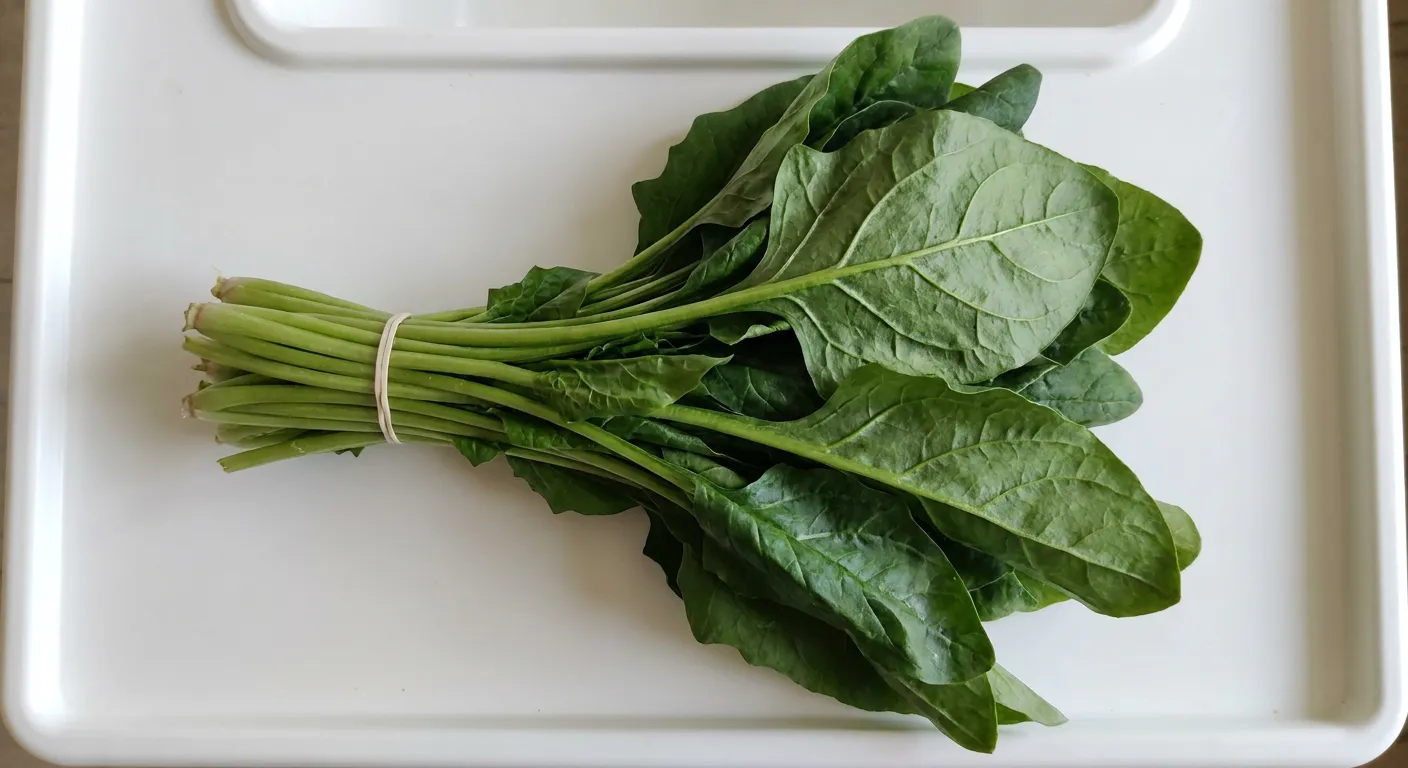
Cooked soft, palak suits her from six months, folding easily into her dal, khichdi or porridge. Green leafy vegetables carry the most vitamin A of any food group in ICMR-NIN's tables, and iron too, though that iron absorbs better when she has it alongside a vitamin-C food.
How to serve
Smooth cooked mash6+ months
Wash the leaves well under running water, then simmer or steam them until they are really soft. Mash or purée them smooth so no stringy bits are left, and if the mash feels thick, loosen it with a spoon of breast milk or formula until it scoops up softly.
From the start you can also stir it through something soft she already takes, like her dal and rice, a khichdi, or a porridge. Keep it plain, with no added salt while she is under one and no sugar before she turns two, even if someone at home adds a pinch to soften its faint bitterness. Fold the palak in smooth, since a loose cooked leaf or strand can stick in her mouth and make her gag.
If your family prefers to start palak at seven or eight months, go in exactly the same way, with the same soft mash and the same small amounts. Offer just a spoonful at first, and let how eager she is guide how much you give.
Soft, finely chopped9-12 months
By now she can move on from the smooth mash to cooked palak chopped or torn into soft small pieces, folded into her khichdi, dal, or a mash she can scoop. Cook it soft enough to squash easily between your fingers, keep the pieces small, and keep her share without added salt while she is under one. Picking up those soft pieces is how she builds her pincer grasp, the thumb-and-finger hold she uses to feed herself.
An occasional gag on a stray bit of leaf while she is still learning to chew is normal, and not the same as choking, so you do not have to drop back to purée.
Soft family-style12+ months
By a year, palak takes its place in the family's everyday meals. Give it to her well cooked and soft, stirred through dal palak, spinach khichdi, or another cooked dish, chopped small enough for her to chew easily, and go easy on the salt in her portion now.
Cooked palak is safe right through the year, winter and evenings included. It is not a 'thandi' food that brings on a cold or cough.
Why?
A cold comes from a virus she catches, not from a cooling food, and nothing in a cooked green changes her body temperature. If serving it at night unsettles the family, give palak earlier in the day instead. That small change keeps everyone comfortable and keeps palak on her plate.
What other moms wonder
Real questions from moms, answered by Anu.
More questions