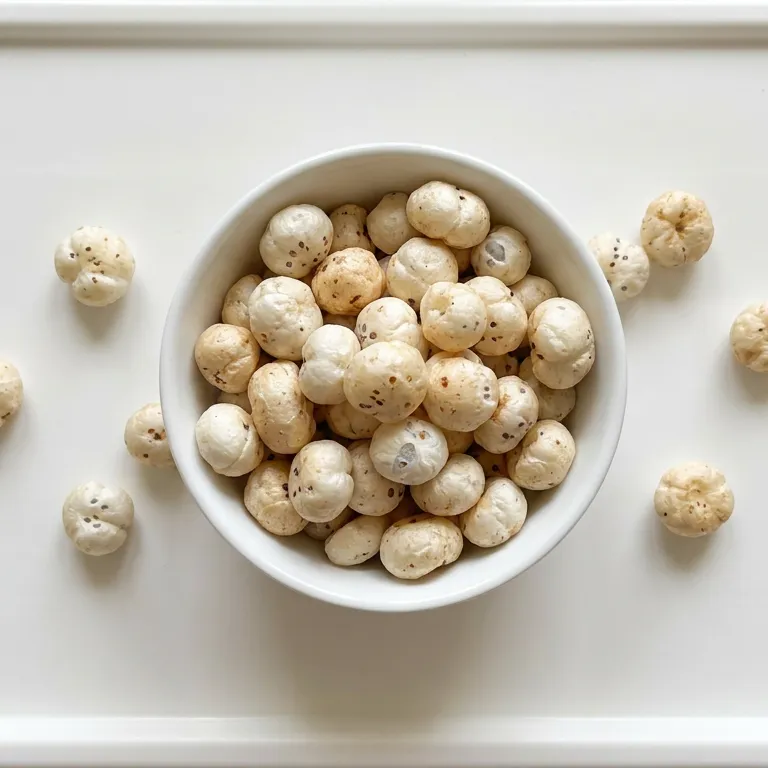
Makhana, what it looks like
Makhana
Based on IAP, ICMR-NIN and 3 more sources
Safe from 6 months
Not a common allergen

Makhana is a light, gentle seed that grinds to a fine, smooth powder and cooks into an easy first porridge. She can start it from around six months, when the WHO and IAP say a baby's first thick, well-mashed foods can begin. It is a soft, simple way to add variety to her early bowls.

How to serve

6+ monthsStart here
9-12 months
12+ months
Fine powder, soft porridge6+ months

Makhana comes to her as a fine powder. We dry-roast the puffed seeds and grind them down fine and lump-free, then cook a spoon of it in a little water into a soft, thick, smooth porridge, stirring in her usual breastmilk or formula at the end if you like. Spoon-fed this way it turns soft and easy to swallow, with nothing firm left for her to choke on, never a powder tipped into a bottle or given as a drink.

A gentle spoonful or two is enough at the start, offered on its own the first time so you can see how she takes it. Keep it plain: no salt while she is small, and nothing sweet before she is two, whatever you hear about a spoon of sugar to help it down. Let her appetite set the pace.

Thicker, grainier porridge9-12 months

By nine to twelve months, the same makhana porridge can go thicker and grainier, softly mashed and gently lumpy rather than perfectly smooth.

As she gets better with texture, you can also cook the makhana down soft in milk until it turns almost mushy, then mash it fully soft so no whole or firm piece is left, kept plain and unsweetened. Cow's milk is fine for cooking like this, though as a drink it still waits until she is one.

A whole roasted makhana is still too hard and round for her, never a piece she could pick up.

Soft in family food12+ months

From a year on she eats from the family table, and the same fine makhana powder she has taken all along folds into the family's porridges, dals, and soft mashes. It stays the smooth, cooked makhana she already knows.

Her share just stays light on salt now, gentler than the rest of the family's food. If the family makes makhana ladoos, a small, soft one made without added sugar or jaggery is fine for her too. The crisp whole roasted makhana is still not for her, since it stays a choke risk well into the toddler years.

Myth busted

Makhana is a gentle everyday food, not a way to fatten her up. You do not have to load it with ghee and milk, and a rounder baby is not the aim.

Why?

You might hear from family that makhana should be piled with ghee and milk to fatten the baby up, and that a chubby baby is a healthy one. Makhana does not have to be rich to be good for her. A small spoon of ghee is plenty, and a little goes a long way for a small tummy.

What other moms wonder

Real questions from moms, answered by Anu.

I'm terrified my 8-month-old will choke on makhana. Even ground, a few sharp bits seem to stay.
That fear makes sense, the whole roasted seed really is a hard, round choke risk. In the soft, cooked-down form she takes it, nothing firm is left to catch. If a bit ever feels gritty on your finger, it needs to be smoother before it goes to her. You are doing what keeps her safe.
Choking vs gagging ›
We started makhana powder and now she seems constipated and gassy. Is it too binding for her tummy?
A few unsettled days are common with any new food, and it really can change her stool for a few days while her tummy adjusts. A little extra water between feeds, a gentle tummy rub, and cycling her legs usually get things moving. If it drags on, check with your paediatrician.

More questions

I keep hearing makhana is 'heaty' and should be skipped or re-prepared in summer. Is that true?
This is a belief many of us grew up with, a traditional idea rather than a medical rule you have to follow. You can serve makhana the same gentle way all through the year, the same soft porridge she already takes, with no need to skip it or re-prepare it when the weather turns warm. And if it eases your mind, keeping makhana to her daytime meals rather than her last one of the day is perfectly fine.
How much makhana, and how often?
A small spoonful stirred into her porridge is plenty, and it is fine most days if she enjoys it. It is a light, puffed seed though, more a gentle add-in than a filling food. So it sits alongside her dal, egg, and ragi across the week, rather than becoming the main thing she leans on. How much she should eat (coming soon)
Is makhana a common allergen? Do I need to watch for a reaction when I start it?
No, makhana is not one of the common allergens. As with any new food, it is still worth giving it on its own for the first few times and keeping an eye on her for a few days before anything else new goes in. That way, if anything ever does show up, you will know what caused it. Starting egg, nuts and other allergens ›
The recipes I see add jaggery, a pinch of salt, or honey. Should I sweeten or salt her makhana?
No, keep her makhana plain. It needs no salt at this age, and nothing sweet, no sugar and no jaggery, until she is past two, whatever a recipe suggests to help it go down. Honey waits until her first birthday too, since it can hold botulism spores, which are risky for a baby under one. Cooked well and kept plain, makhana is easy for her to take on its own.
Do I need to check makhana for worms before using it?
Yes, it is worth a quick check. Loose makhana can occasionally have tiny worms tucked inside, so split a few open and look before you roast and grind a batch. A fresh, dry pack and that quick look are all you really need.

If this helped, send it to a friend.

Share with a mom friend ›
Talk to meWondering about a food, or something a page doesn’t cover?I check the guidelines and reply. Talk to me on WhatsApp Want to hear when new pages go up?One short note on WhatsApp when a new food or guide is ready. Nothing else. Follow the channel
Educational only, and never a replacement for your paediatrician. Read the full note ›