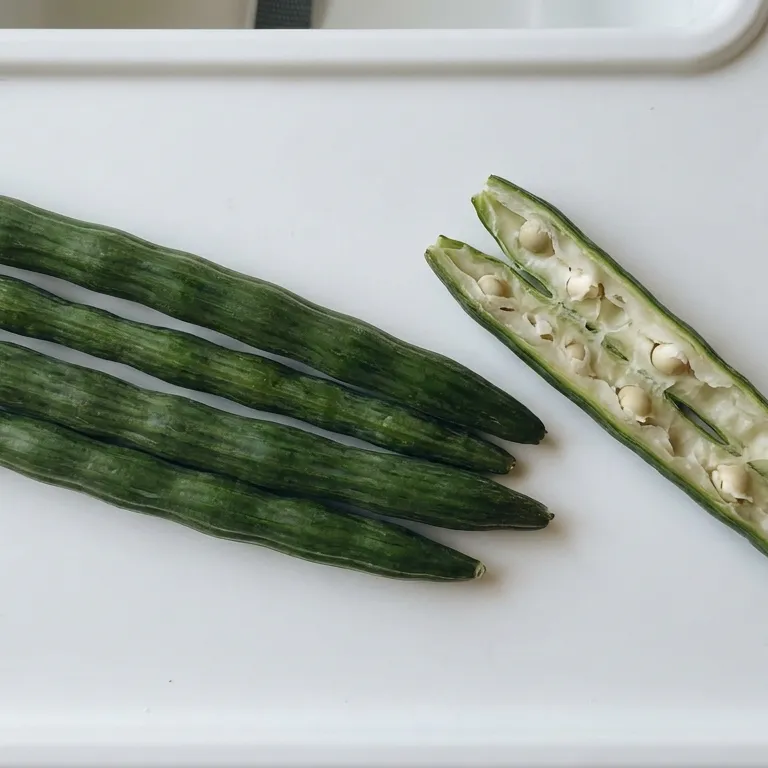
Drumstick, what it looks like
Drumstick
Based on IAP, ICMR-NIN and 2 more sources
Safe from 6 months
Not a common allergen

Cooked very soft and mashed smooth, with the tough fibre and hard seeds taken out, drumstick pulp is gentle enough for her from around six months. It is one of the everyday vegetables that add variety, and the WHO counts vegetables among the daily sources of vitamins A and C and fibre a growing baby needs.

How to serve

6+ monthsStart here
9-12 months
12+ months
Soft mashed pulp6+ months

A soft mashed pulp is a gentle way to start her on this ridged, fibrous pod. Simmer or pressure-cook it until it goes very soft, then scoop out only the soft inner pulp, taking out every fibrous strand and hard seed, and mash it smooth. A little breast milk, formula or water loosens it until it is thick enough to stay on the spoon.

You can also stir the soft pulp through a sambar or dal she already eats. Keep it plain, with no added salt while she is little and no added sugar before she is two.

A little pulp is plenty to begin with. How much she takes after that is up to her. If your family, or your own doctor, would rather wait a little on drumstick, start it then in exactly this way, with the same soft mash of the inner pulp.

Mashed pulp in soft meals9-12 months

By nine to twelve months her meals grow thicker and lumpier. The same soft drumstick pulp folds right into them, into a soft dal or a little khichdi. It is still scooped free of every fibre and hard seed, so it stays smooth even as the food around it gets more texture.

Steamed carrot and broccoli go well with it too. Cook them very soft and mash them together with the pulp, a simple mixed vegetable mash for this age.

At this age drumstick is not a piece she picks up herself. The pod is too fibrous and its seeds too hard for that, so it stays a soft mash folded into her food. A whole pod, or any half-cooked piece, still stays away from her.

Mashed pulp in family meals12+ months

From a year on, the same soft inner pulp goes into the family's everyday dal or sambar. Cook it soft, clear out every fibre and hard seed, and mash it through so it becomes a small part of the shared pot rather than a dish on its own, kept light on salt for her share.

Even now, never hand her a whole or half-cooked pod to chew. A spoon of the smooth pulp stirred through her food keeps drumstick a gentle, everyday part of her plate.

Myth busted

A thin, clear drumstick soup is not a meal on its own. It will not make her bones stronger or help her walk sooner the way the old belief promises. It should never take the place of her milk feeds or her thicker foods.

Why?

A thin soup is mostly water. The soft pulp it is made from is where the vegetable itself sits. Offer that soft mashed pulp as one small part of her meals, stirred through the khichdi or dal already on her plate. Keep it alongside her milk and her other foods, never in place of them.

What other moms wonder

Real questions from moms, answered by Anu.

She's just started drumstick and I'm scared a hard seed or fibre will choke her.
That worry makes sense with those tough strings and hard seeds on her plate. The safe way keeps only the soft inner pulp, cooked till it falls apart. Go slowly, taking out every fibre and hard seed as you scoop.
Choking vs gagging ›
We gave drumstick pulp yesterday and now there's a lot of gas, did I give too much?
You don't have to stop drumstick over it. Offer just a small spoon next time and see how she settles over the next few days. If the gas keeps up, or she seems really unsettled or just not herself, check with your paediatrician.

More questions

I keep trying to mix the pulp into his khichdi but he gags and turns away every time.
The funny faces and turning away don't mean anything is wrong. Keep offering a little alongside foods he already likes, with no pressure to finish. It can take many tries before a new vegetable feels familiar. When she refuses food (coming soon)
I keep hearing drumstick is 'garam' or heaty and should be skipped in summer, is that true?
It is fine to give right through the year, summer included. At home you may hear that it is 'garam' or heaty and best kept away in the heat. That is a household belief, and different families feel differently about it. There is no season-based rule in the feeding guidance, so it stays on her plate just the way she takes it now, whatever the season.
You may hear drumstick should wait until 8 or 9 months, why, and what does this page say?
The trusted guidelines give one general rule, that vegetables can begin from six months, and none of them look at drumstick on its own. The baby-recipe pages that do name the pod tend to place it a little later, around eight or nine months. This page starts it at six months with a soft mash of the inner pulp. Start here (coming soon)
How much drumstick, and how often?
A small spoon of the mashed pulp folded into a meal is plenty. At six to eight months a whole meal is only about two or three tablespoonfuls of food in all, so a little drumstick goes a long way. Her appetite can decide how much she finishes. It is an everyday vegetable, so rotate it with others rather than leaning on it alone. How much she should eat (coming soon)
Should I give her the soft pulp, or just the strained water from boiling it?
The soft pulp. An older idea says to give only the strained water, because the pulp is too hard to digest. But a baby needs thick, well-mashed food to get enough from each spoonful. The thin water leaves most of the food behind. That soft mash, rather than thin water, gives her the vegetable itself.

If this helped, send it to a friend.

Share with a mom friend ›
Talk to meWondering about a food, or something a page doesn’t cover?I check the guidelines and reply. Talk to me on WhatsApp Want to hear when new pages go up?One short note on WhatsApp when a new food or guide is ready. Nothing else. Follow the channel
Educational only, and never a replacement for your paediatrician. Read the full note ›