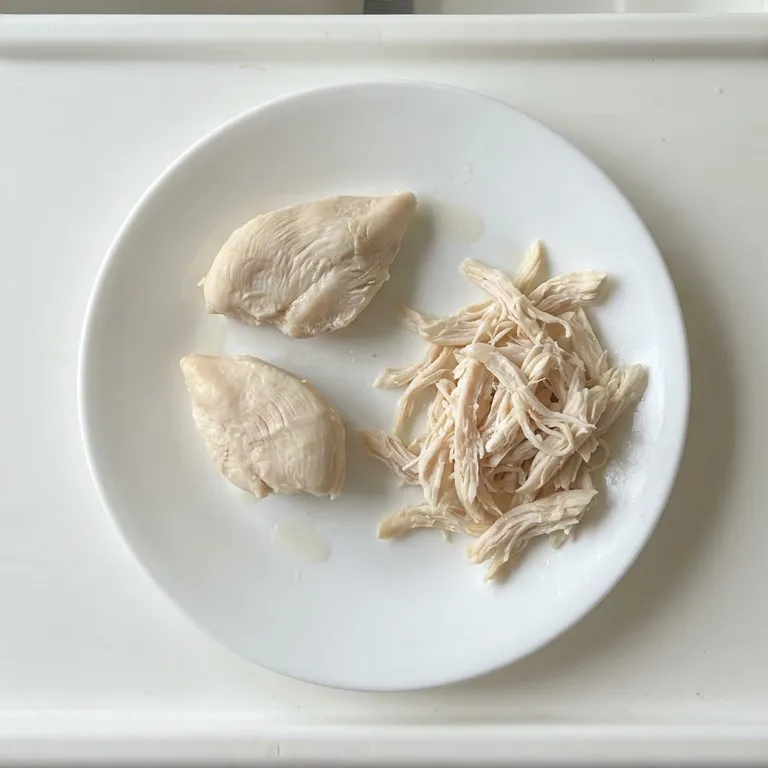
Chicken, what it looks like
Chicken
Based on IAP, ICMR-NIN and 3 more sources
Safe from 6 months
Iron-richHigh-proteinNot a common allergen

Chicken gives her haem iron, the form a baby absorbs best, along with the zinc and protein she needs. The WHO notes haem iron is taken up about twice as well as the iron in plants, and puts animal foods like chicken on her plate from six months.

How to serve

6+ monthsStart here
9-12 months
12+ months
Soft minced chicken6+ months

At six months we can begin with well-cooked, soft minced chicken, boned and skinned, minced or shredded very fine. Cook it soft, not dry, and loosen it with a little of its own cooking water, breast milk or formula so it is smooth and easy to swallow.

An easy way most days is to fold that soft mince through a dal, khichdi or mild vegetable purée she is used to. At this age the real choking worry is dry or chunky chicken. Keep her portion soft and very finely minced, with no whole pieces or cubes. A spoonful or two is plenty at first, and you can let her appetite lead.

If your family holds off until nearer eight months, that is fine too. Start it exactly as above then, the same soft minced chicken in small amounts.

Soft shreds and pieces9-12 months

By around nine months she can manage soft shredded chicken and small, bite-sized pieces held in her own hand. Reaching for these builds her pincer grasp, that thumb-and-forefinger pinch she leans on for feeding herself. Keep every piece soft, small and free of any bone, with no hard chunks or cubes.

Shredded chicken mixed into rice, dal or a soft khichdi is still an easy way to serve it, with no salt added to her food while she is under one.

Spoon, fingers, or both? (coming soon)
Soft family pieces12+ months

Once she is one, she can eat the family's chicken, in a mild curry or plainly cooked, chopped or shredded into soft pieces she can manage herself.

Go on removing every bone and the skin, and keep her portion soft, easy on salt and spice, and still clear of whole chunks or cubed pieces she could choke on.

Spoon, fingers, or both? (coming soon)
Myth busted

Soft, well-minced chicken suits her from the time she starts solids. She does not have to stay on clear broth until nine to twelve months.

Why?

Clear broth is mostly water, and it misses the iron and protein that make chicken worth giving. The soft minced meat itself is where the iron sits, so that is what to offer her.

What other moms wonder

Real questions from moms, answered by Anu.

I boiled chicken and it turned so chewy, now I keep picturing her choking on a piece.
That chewy, stringy boiled piece is exactly what makes chicken feel risky, and picturing her choking is so common. What she takes easily is that same soft, moist mince folded through a dal or khichdi she already likes, away from whole chunks and cubes. One chewy attempt does not have to be the whole story.
Choking vs gagging ›
Everyone at home says chicken is too 'heaty' and not for babies, and I feel torn about it.
Lots of homes still see chicken as a 'heaty' food, and it is hard to go against everyone you love. A well-cooked chicken is a normal first food, not a heaty one. The IAP lists this heaty worry among its common feeding myths. Older relatives may remember stricter rules, so start small and let her show you she is fine.

More questions

She loved chicken for months, now near her first birthday she throws it out. Did I do wrong?
A baby who happily ate chicken suddenly turning away from it near her first birthday is so common, and it is not something you did. Her tastes are just shifting for a while. Keep offering a little, shredded soft, without pressure. For so many of us it passes in time. When she refuses food (coming soon)
Some Indian charts say wait until eight months for chicken, and others say six. Why the different ages, and which does this page follow?
This page goes with six months. Both the WHO and the IAP put animal foods like chicken on a baby's plate from that age. The AAP, too, puts meat among the early foods, for the iron and zinc it carries. Eight months, or a little later, is what some Indian charts prefer, written by people just as careful, and that choice is completely fine as well. If your paediatrician or your family prefers to start a little later, begin it in exactly the same way, with soft minced chicken in small amounts.
Should I try baby-led weaning with chicken?
Chicken suits both. Some of us begin with soft minced chicken off a spoon at six months. By about nine months, once she is working on her pincer grasp, she can pick up shredded pieces and small soft bites on her own. That shift from mash to little finger foods around nine months is the usual way here. Spoon, fingers, or both? (coming soon)
How much chicken, and how often?
Something from the dal, egg and meat group belongs on her plate every day. Chicken takes that turn about twice a week or so, with dal or egg between times so her plate stays varied. About a tablespoon at a meal is plenty for her now. You can let her appetite decide rather than reaching for a weighing scale. How much she should eat (coming soon)
Is country or desi chicken (nati koli) actually safer for my baby than broiler chicken?
This one comes up a lot, and the honest answer is that no baby-feeding guidance takes a side either way. What matters for her is that the chicken is fresh, cooked through fully and deboned, whichever kind you buy. Choose what your family trusts and can get fresh.
Which spices can I add to her chicken, and how do I cook it without the family's salt and masala?
Her chicken is best kept plain, with no added salt. The easy way is to lift her portion out of the pot before the family's salt and masala go in. Folded into the dal or khichdi she already takes, the dish itself gives her plenty of flavour, so her small share can stay gentle and plain. Salt, sugar and honey ›

If this helped, send it to a friend.

Share with a mom friend ›
Talk to meWondering about a food, or something a page doesn’t cover?I check the guidelines and reply. Talk to me on WhatsApp Want to hear when new pages go up?One short note on WhatsApp when a new food or guide is ready. Nothing else. Follow the channel
Educational only, and never a replacement for your paediatrician. Read the full note ›