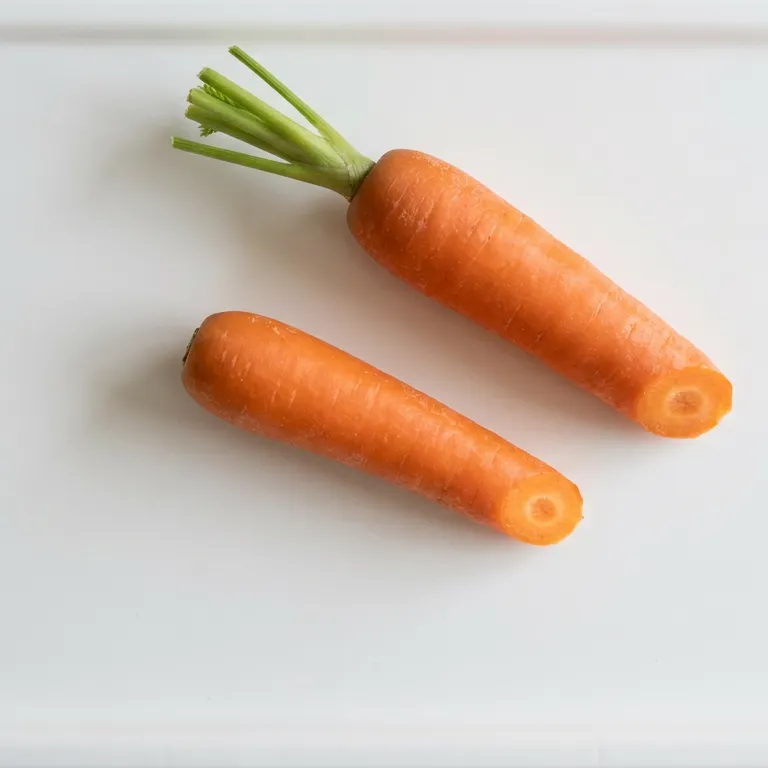
Carrot, what it looks like
Carrot
Based on IAP, ICMR-NIN and 3 more sources
Safe from 6 months
Vitamin A-richNot a common allergen

Carrot is one of the orange vegetables the WHO and ICMR-NIN count among the vitamin-A-rich foods, and the beta-carotene it carries is what her body turns into vitamin A. Cooked until soft, it mashes smooth for a six-month mouth. It is one of the first vegetables in the daily variety she needs from around six months.

How to serve

6+ monthsStart here
9-12 months
12+ months
Smooth cooked mash6+ months

We can start her on soft cooked carrot, steamed or simmered until it is really soft and then mashed smooth with a fork. If the mash feels thick, thin it with a little breast milk, formula, or the water it cooked in until it scoops up softly. Cooking it soft is what matters most, since raw carrot is too hard and dense for her to chew safely.

When she is comfortable eating it on its own, you can stir the mash through a dal or porridge she already eats. Keep it plain, with no added salt while she is little and no added sugar, whatever the family says about a pinch to help the taste. Start with a small taste and let her appetite lead from there.

Soft cooked batons9-12 months

She can pick up soft cooked carrot herself now. Cut it into narrow batons about the width of your finger, lengthwise rather than into round coins, and cook them soft enough to squash between your fingers. Holding the batons is how she works on her pincer grasp, the grip she uses to feed herself.

You can also offer soft mashable pieces, or a little grated cooked carrot mixed into her khichdi. As she learns to chew, a short gag on these soft cooked pieces is normal, and it does not mean she is choking. Keep raw carrot off her plate still, since it is hard, and round pieces can block her airway.

Spoon, fingers, or both? (coming soon)
Soft family pieces12+ months

Carrot is just part of the family's meals now. Offer it cooked soft in bite-size pieces, or in her khichdi or dal, chopped small enough to chew easily.

Raw carrot still waits until she is older, when she has her molars and chews well. Until then, keep it cooked soft.

Spoon, fingers, or both? (coming soon)
Myth busted

The safe first carrot is one cooked until soft. A hard raw carrot is not a teether for a baby, even when her gums are sore.

Why?

A raw carrot stays firm and dense, the exact shape and hardness that can lodge in a baby's windpipe, which is why the IAP and AAP name raw carrot a choking food to keep off her plate. Cooked until soft it mashes easily for her, and raw carrot waits until she is older and has the molars to chew it. If everyone at home wants to ease her sore gums, a clean chilled teether or a cold spoon gives the same comfort without the choking risk.

What other moms wonder

Real questions from moms, answered by Anu.

She gags on the steamed carrot sticks and I'm terrified she's choking. Should I go back to mashing?
Watching her gag is scary, I know. But on soft cooked carrot it is usually gagging and not choking, and it is how she learns to move food safely. There is no need to go back to mashing. As long as those soft cooked batons squash easily between your fingers, she is doing exactly what she should.
Choking vs gagging ›
I keep mixing boiled carrot with apple but she spits it right out. What am I doing wrong?
You are not doing anything wrong. A new taste like carrot often takes many tries, and spitting it out is part of that, not a no. Offer it plain first so she tastes the carrot on its own, and try again when she is playful, not too hungry. Some babies take eight to ten tries.
When she refuses food (coming soon)

More questions

We started mashed carrot last week and now she seems constipated and gassy. Has anyone else had this?
Those first days on a new food can bring some gas and harder stools, and it usually eases as her tummy gets used to it. Keep her carrot cooked soft, and offer her little sips of water once or twice a day now that she is on solids. If she stays uncomfortable for long, check with your paediatrician.
Her skin and stool look a bit orange and people at home worry it's jaundice. Should I stop carrots?
A little orange tint to the skin is nothing to fear. It can show up when a baby is eating plenty of orange vegetables like carrot, and it settles on its own. It usually fades once you bring in other colours on her plate. Jaundice is a separate thing that your paediatrician checks for, and she can tell the two apart in a moment. So there is no need to stop carrots, and you can check with her if you are ever unsure.
Should I try baby-led weaning with carrot?
Yes, and carrot makes it a gentle step up. She starts on smooth spoon-fed mash at six months. From around nine months she moves to soft cooked batons she can hold herself, as her pincer grasp builds. That is where the IAP puts the step from mash to finger food. Spoon, fingers, or both? (coming soon)
How much carrot, and how often?
Carrot is fine every day, since vegetables are part of the daily variety she needs. Start with a small taste and build up to a couple of tablespoons in a meal over the next weeks. After that, let her appetite lead. It is one vegetable among many, so keep rotating others in with it rather than leaning on carrot alone. How much she should eat (coming soon)
The usual first foods, carrot, banana, apple, all taste sweet. Which non-sweet vegetables can I try so she doesn't get a sweet-leaning palate?
It is a good instinct, and an easy one to act on. Offering a wide range of vegetables early helps her get used to many tastes, and a varied plate across the food groups is what she needs each day anyway. You can bring in the less sweet ones like well-mashed lauki, pumpkin, or peas. Carrot still has its place, just as one taste among many.

If this helped, send it to a friend.

Share with a mom friend ›
Talk to meWondering about a food, or something a page doesn’t cover?I check the guidelines and reply. Talk to me on WhatsApp Want to hear when new pages go up?One short note on WhatsApp when a new food or guide is ready. Nothing else. Follow the channel
Educational only, and never a replacement for your paediatrician. Read the full note ›