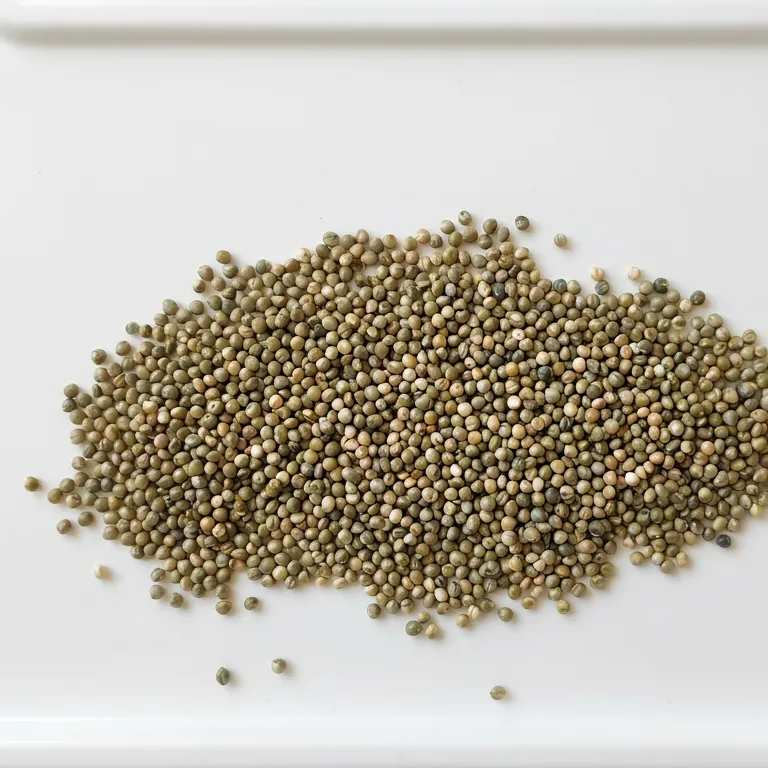
Bajra, what it looks like
Bajra
Based on IAP, ICMR-NIN and 2 more sources
Safe from 6 months
Not a common allergen

Bajra is a homely millet that cooks into a soft porridge from six months, alongside her other first foods. It sits among the everyday cereals in ICMR-NIN's diet charts.

How to serve

6+ monthsStart here
9-12 months
12+ months
Soft, smooth porridge6+ months

Cook bajra right down into a soft, smooth porridge thick enough to sit on a tilted spoon without running off, then loosen it with a little breast milk, formula, or water so it scoops up easily. Let it cool before it reaches her, and any coarse, gritty grains can be mashed or ground away so every spoonful is soft and lump-free.

Many of us dry-roast the bajra flour for a couple of minutes first, until it smells warm and nutty. The roasting takes away the raw smell, and the flour then stirs into hot water without lumps, for an even smoother porridge.

A small spoonful is the right amount to begin, and you can offer a little more each time as her tummy settles into it. There is no race to start bajra either. Many families begin with rice or ragi and bring bajra in around eight months, and if her tummy seems unsettled by it, it is fine to pause and try again then. Keep it plain, with no added salt while she is little and no added sugar before she is two. Let her appetite tell you when she has had enough.

Thicker, lumpier mash9-12 months
Her thicker mash
Soft bajra khichdi

As she gets steadier, around nine to ten months, let the porridge grow thicker and a little lumpier so she has some soft texture to work her gums on, and keep grinding or mashing away any hard or gritty grains so nothing sharp catches her.

A soft bajra khichdi with moong dal suits her now too. And if bajra dosa is already part of your family's meals, cooked soft, this is around the age she can start sharing it.

Soft roti and family food12+ months
Her thicker soft mash
Soaked soft roti pieces

By about twelve months, bajra can share in the meals everyone else at the table is having, cooked soft and kept plain, light on salt, with no added sugar before she is two. It can go on her plate as her usual porridge grown thicker into a soft mash, or worked soft into the everyday dishes on the family plate.

This is also the age a soft bajri roti suits her, torn into small pieces and soaked fully soft in warm dal, milk, or curd until she can mash it easily on her gums. It should stay well soaked and soft, never dry or firm.

Spoon, fingers, or both? (coming soon)
Myth busted

Bajra is a year-round food, summer and all. There is no reason to keep it away in the warm months out of worry it will heat her up.

Why?

A cooked grain has no power to warm her from the inside, so nothing about the season makes bajra unsafe. If it settles the worry at home, you can serve it earlier in the day and pair it with a little curd or ghee, the way many families already do. There is no need to stop it when the weather turns hot.

What other moms wonder

Real questions from moms, answered by Anu.

Everyone at home wants to start bajra, but I'm scared it's too heavy for my 7-month-old's tummy.
Bajra can feel like a heavy, grown-up grain, so it is easy to wonder if her tummy is ready for it. It is actually one of the everyday cereals ICMR-NIN includes in babies' meals right from six months, served soft and smooth as a porridge. There is nothing here to worry about.
I ground the bajra fine, but it still feels gritty and she keeps spitting it out.
That grit means the flour needs a finer grind. Sieve it once more, and cook the porridge a little longer with extra water until every grain breaks down soft. Spitting it out does not mean she has decided against bajra, it is often just her learning a new texture, so keep gently offering.
When she refuses food (coming soon)

More questions

I keep hearing bajra should be given with lots of jaggery for strong bones. Is that right?
No, she does not need jaggery, and added sugar in any form is best kept out of her food until she is two. Bajra makes a soft, comforting porridge on its own, and a little dal or ghee is all it needs to taste good to her. Salt, sugar and honey ›
Everywhere I read that bajra is iron-rich. Is that true?
There is truth in it, but with a catch: iron from a grain is harder for her to absorb. The foods ICMR-NIN counts on for her iron are pulses, green leafy vegetables, and meat or fish if the family eats them. Fermenting or sprouting the grain makes that iron easier for her to absorb, and a little vitamin C fruit with the meal helps too. Bajra stays her good everyday grain, just not the one to lean on for her iron.
Should I try baby-led weaning with bajra, or keep spoon-feeding the porridge?
You can do either, and many babies naturally move between the two. A soft bajra porridge is easiest from a spoon at the start, and spoon-feeding is proper weaning too. Around her first birthday, when she likes picking food up, a soft, well-soaked roti torn small gives her something to hold on her own. Spoon, fingers, or both? (coming soon)
How much bajra, and how often?
Bajra is an everyday grain, like rice, so you can offer it through the week as one of her regular cereals rather than saving it for special days. A couple of teaspoons of cooked porridge is plenty to begin with, growing to about half a small katori by the time she is one. Let her appetite lead, and keep her meals varied with other grains too. How much she should eat (coming soon)

If this helped, send it to a friend.

Share with a mom friend ›
Talk to meWondering about a food, or something a page doesn’t cover?I check the guidelines and reply. Talk to me on WhatsApp Want to hear when new pages go up?One short note on WhatsApp when a new food or guide is ready. Nothing else. Follow the channel
Educational only, and never a replacement for your paediatrician. Read the full note ›