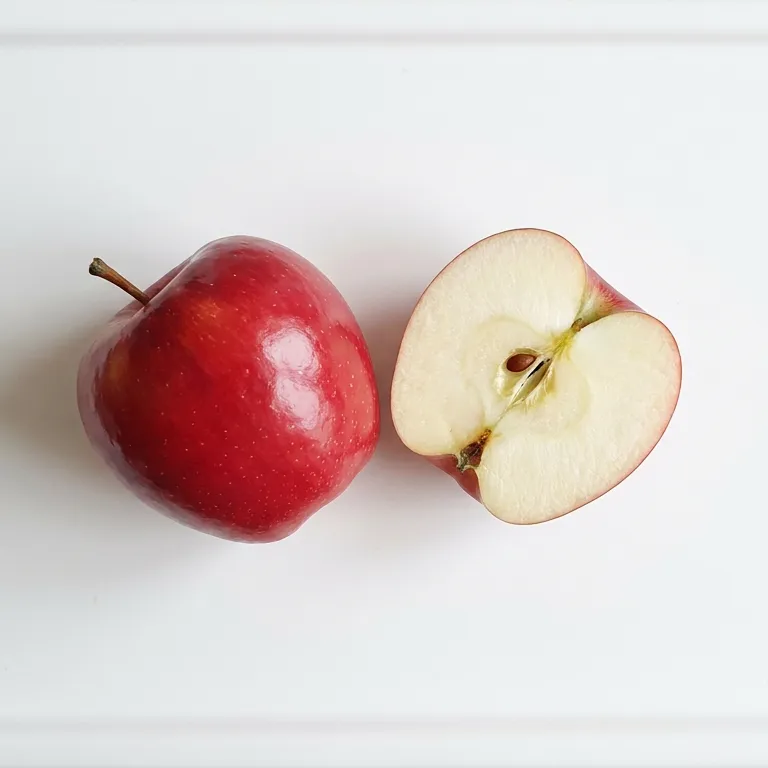
Apple, what it looks like
Apple
Based on IAP, ICMR-NIN and 3 more sources
Safe from 6 months
Not a common allergen

Cooked soft and mashed smooth, apple is a gentle first fruit from six months, and ICMR-NIN places it among the steamed and puréed foods babies start with. It is an easy, well-liked way to bring in the daily fruit a varied diet needs. It is more an everyday fruit than a standout for any one nutrient.

How to serve

6+ monthsStart here
9-12 months
12+ months
Steamed apple purée6+ months

Her first apple is a steamed purée. Peel it, take out the core and seeds, then cook it soft by steaming, boiling, or in the pressure cooker until a piece mashes easily with a fork. Blend or mash it smooth, and if it is thick, loosen it with a little breast milk, formula, or water to a soft, spoonable purée.

Cooking it soft this way matters, because raw apple is hard and can make her choke. The apple is sweet on its own, so it needs no added sugar or salt. When she is settled and taking it plain, you can also stir the purée through a porridge or dal she already eats, and start with just a spoonful or two, letting her appetite lead.

Soft cooked pieces or grated9-12 months

Now she can pick up food herself, so offer soft cooked apple in small pieces she can hold. Lifting each piece is good practice for her pincer grasp. This is also when raw apple can come in for the first time, but only grated.

Before any raw apple, always take out the core and seeds first, and never offer it in thin slivers or hard chunks. Grated, it is gentler for her to manage than a chunky wedge, so stay close while she eats.

Spoon, fingers, or both? (coming soon)
Family pieces or rounds12+ months

From a year, apple joins whatever the family is eating. She can take it as soft cooked pieces, grated, or in a raw round slice about as thick as your finger, depending on how well she chews. It can also go into her other foods, stirred into a porridge. Whenever you give it raw, whether grated or in a round, always take out the core and seeds first, since apple seeds can be harmful if she swallows too many.

Firm raw pieces are still a lot for her to manage, so stay close while she eats.

A whole apple to bite into suits her a little later, from around eighteen months, once she chews well and sits calmly. Choose a softer, less crunchy variety, and again take out the core and seeds first. Once the core is out, give her the apple whole to bite from, rather than cutting it into wedges. A whole apple gives her a flatter, more manageable bite.

Spoon, fingers, or both? (coming soon)
Myth busted

A cold or cough has nothing to do with the fruit she eats. You do not have to stop apple when she is sniffly.

Why?

When a baby has a cold or cough, there is no need to take away her apple or any other everyday food. A sniffle is not a reason to stop a fruit she is used to, so you can keep giving it cooked and soft as usual. Serve it lightly warmed instead of cold from the fridge, and earlier in the day, so nobody at home has to worry about it.

What other moms wonder

Real questions from moms, answered by Anu.

Every time I give apple I freeze up, terrified she'll choke. I can't tell choking from gagging.
Apple is one of the firmer fruits, so this fear makes complete sense. The thing that settles it is cooking the apple until it is soft enough to mash, which takes the hard, choke-able texture away. And a loud gag is her learning to manage food, not the same as real choking, which is quiet.
Choking vs gagging ›
Her stools have turned hard and painful, and I'm scared the apple is making it worse.
Hard, painful stools are a real worry when solids begin. Keep offering her usual mix of foods and a little extra water, and if it stays painful, check with your paediatrician.

More questions

The purée came out sour, she makes a face and turns away, and I feel I'm failing.
It is no sign you are doing anything wrong. Many of us find a naturally sweeter variety can help. New tastes often take many tries, so keep offering small amounts without any pressure. When she refuses food (coming soon)
Is it true that imported apples like Washington or Fuji are better for babies than local Kashmiri or seasonal ones?
This is a common belief, but a fresh local apple is just as good for her as a pricey imported one. The Indian Academy of Pediatrics lists the idea that costly, imported, cold-stored fruits are healthier than local seasonal ones as a plain myth. Whichever apple is fresh and in season near you is a good choice, so there is no need to pay more for an imported label.
Should I try baby-led weaning with apple, and when can she pick it up herself?
With apple it moves in two steps, whichever mix of spoon and fingers you use. A smooth cooked purée on a spoon suits her at six months, and from around nine months she can pick up soft cooked pieces or grated apple herself, once her pincer grasp is coming in. Nine months is about when the IAP places the shift from mashed food to finger food. Spoon, fingers, or both? (coming soon)
How much apple, and how often?
Apple every day is fine, as it sits among her daily fruits. A few spoonfuls at a taste is plenty to begin with, and over the next couple of months you can build up to about a quarter to half a small katori. It is just one fruit of many, so let other fruits and vegetables keep their turn alongside it rather than leaning on apple alone. How much she should eat (coming soon)
Can I cook apple purée ahead and reheat the leftovers safely?
Yes, you can cook a batch ahead. Cool it quickly, keep it covered in the fridge, and use it within two days. Reheat only the portion she will eat, heating it until it is steaming hot all through, then let it cool before serving. Do not reheat a serving more than once, and throw away anything left in her bowl rather than saving it.

If this helped, send it to a friend.

Share with a mom friend ›
Talk to meWondering about a food, or something a page doesn’t cover?I check the guidelines and reply. Talk to me on WhatsApp Want to hear when new pages go up?One short note on WhatsApp when a new food or guide is ready. Nothing else. Follow the channel
Educational only, and never a replacement for your paediatrician. Read the full note ›